DeX SDLC Series Module 5 of 9 · Code Scaffolding Accredited Architecture

Build: Autonomous Code Generation & Scaffolding

Explore autonomous code generation, clean architectural scaffolding, deterministic dependency locking, and production-ready microservices.

Course Learning Progress 5 of 9 Completed (56%)
Next Up: 06 · QA & Verification
Lesson 05: Build: Autonomous Code Generation & Scaffolding
● Studio HD 1080p
Curriculum Specs & Deep Dive

Lesson Overview & Engineering Resources

Comprehensive architectural analysis, verifiable schemas, personal scratchpad, and comprehension quiz.

Autonomous Coding

Clean Architecture at Machine Speed

Unlike generic code assistants that suggest snippets line-by-line, DeX writes complete, coherent codebases across multiple files simultaneously, enforcing hexagonal architecture and domain boundaries.

1. The Problem with Fragmented Code Snippets

Single-file code generation frequently causes architectural drift: inconsistent naming conventions, broken import paths, and forgotten database indexes. When individual developers stitch snippets together, tech debt accumulates rapidly.

DeX solves this with Holistic Repository Scaffolding. Builder agents operate on full workspace contexts, ensuring that controllers, domain models, database repositories, and unit tests are written with seamless compatibility.

Deterministic Static Validation

Every generated file passes through internal compiler gates, strict linter rules (ESLint, Prettier, PyRight), and type-checkers before it is committed to the workspace branch.

2. What DeX Builds During This Stage

Type-Safe Backend Services

Clean controllers, domain services, database models, and transactional boundaries generated according to spec.

Responsive Frontend Components

Accessible, modular UI components with state management, form validation, and reactive event bindings.

Automated Security Guardrails

Built-in parameterized queries, input sanitization, rate-limiting middlewares, and OWASP Top 10 defenses.
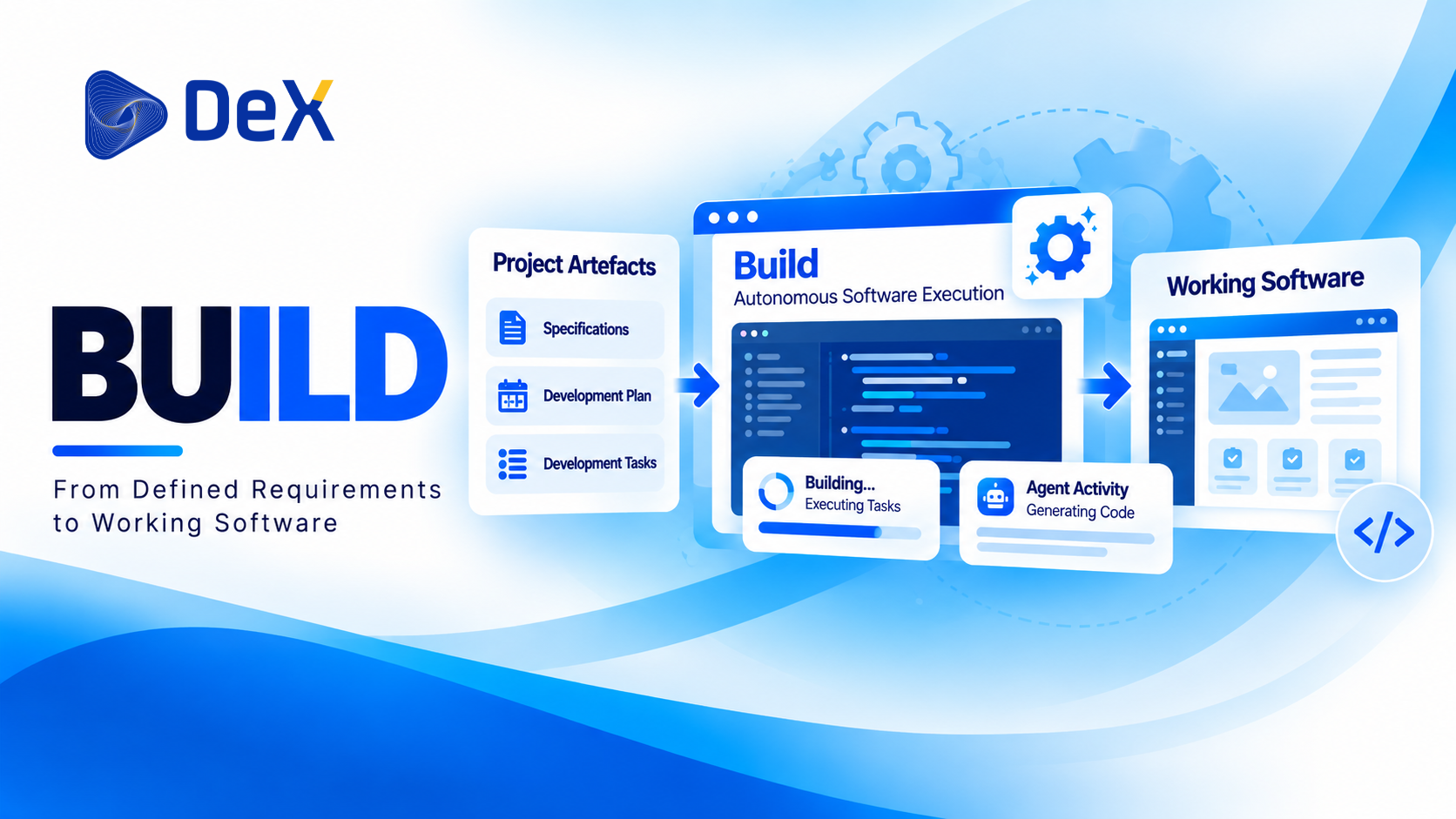
DeX Code Generation Console
Figure 5.1: Multi-Agent Code Scaffolding, Live Type-Checking & Syntax Verification Build Environment

3. Autonomous Execution Steps

In this video, watch the autonomous build pipeline in action:

  • Initiating parallel agent threads on the DAG tasks from Episode 04.
  • Observing live code generation across REST endpoints and UI components.
  • Reviewing the instant compile checks and automatic syntax healing.

Engineering Artifacts & Specs

Download architectural blueprints, schema contracts, and pipeline definitions for this phase.

Phase Architecture Blueprint

High-resolution diagram of the multi-agent execution pipeline.

Download Diagram (PNG)

Agent Contract & Schema

Strict OpenAPI 3.1 & JSON Schema validation contracts.

Download Contract (JSON)

Sprint DAG Breakdown Template

Machine-readable dependency graph structure for autonomous sprints.

Download Template (YAML)

Full SDLC Curriculum Syllabus

Complete curriculum breakdown covering all 9 autonomous delivery phases.

View All 9 Episodes

Personal Learning Scratchpad

Type notes as you follow along. Notes are automatically saved to your browser's local storage.

Module Comprehension Assessment

Test your understanding of the architectural principles covered in this episode.

Question 1 of 2
Which architectural pattern is enforced by DeX code generation?
Question 2 of 2
How does the Build Agent handle external package dependencies?