1. Why Traditional QA Pipelines Create Bottlenecks
Manual QA is slow, and flaky automated test suites create alert fatigue. When tests fail in legacy pipelines, human engineers must analyze stack traces, reproduce issues locally, and submit new pull requests—taking days per iteration.
DeX introduces Self-Healing Test Cycles. When a test assertion fails, the QA Agent captures full memory heap dumps, network logs, and DOM snapshots, diagnoses the exact failure point, and invokes the builder agent to patch the code instantly.
Automated Mutation & Coverage Verification
DeX doesn't settle for superficial line coverage; it runs mutation tests to ensure assertions actively catch logic inversions and edge condition anomalies.
2. Key Testing Dimensions Covered in Lesson 06
API Contract Testing
Verification against OpenAPI 3.1 specifications ensuring schema parity, headers, and error responses.
Headless E2E Browser Testing
Automated user journey execution verifying UI state, responsiveness, keyboard accessibility, and DOM rendering.
Closed-Loop Healing
Self-contained debug-and-patch cycles where failing tests trigger immediate, validated code repairs.
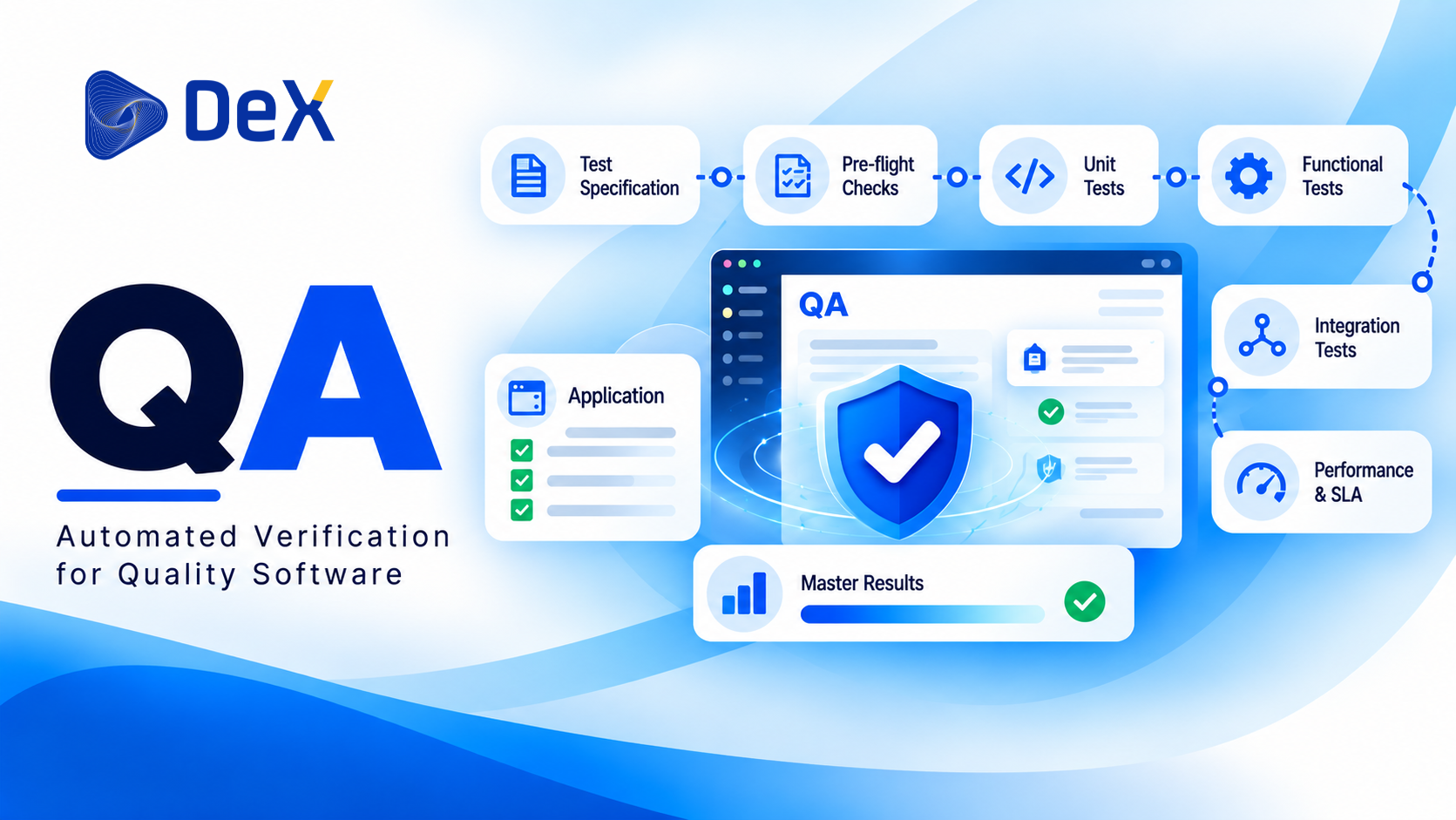
3. Autonomous QA Workflow Highlights
In this video session, explore how DeX executes comprehensive verification:
- Running the full suite of unit, integration, and E2E regression tests.
- Simulating an unexpected edge-case failure and watching the self-healing loop fix it.
- Generating immutable cryptographic quality sign-off certificates.